> For the complete documentation index, see [llms.txt](https://docs.reorc.com/llms.txt). Markdown versions of documentation pages are available by appending `.md` to page URLs; this page is available as [Markdown](https://docs.reorc.com/cn-reorc-help-center/shu-ju-jian-mo/shu-ju-xue-yuan.md).
# 数据血缘
数据血缘(Data lineage)有助于追踪数据在转换过程中的流动,从源头到模型。它显示了数据集之间的依赖关系及其变换过程,帮助更好地理解数据处理中的各个环节以及变更的影响。
在 Recurve 中,数据血缘通过有向无环图(DAG)进行表示。每次编辑资产并通过 `ref()` 或`source()` 函数引用其他资产时,Recurve 会自动跟踪这些关系,并在 DAG 视图中进行展示。
## 查看数据血缘
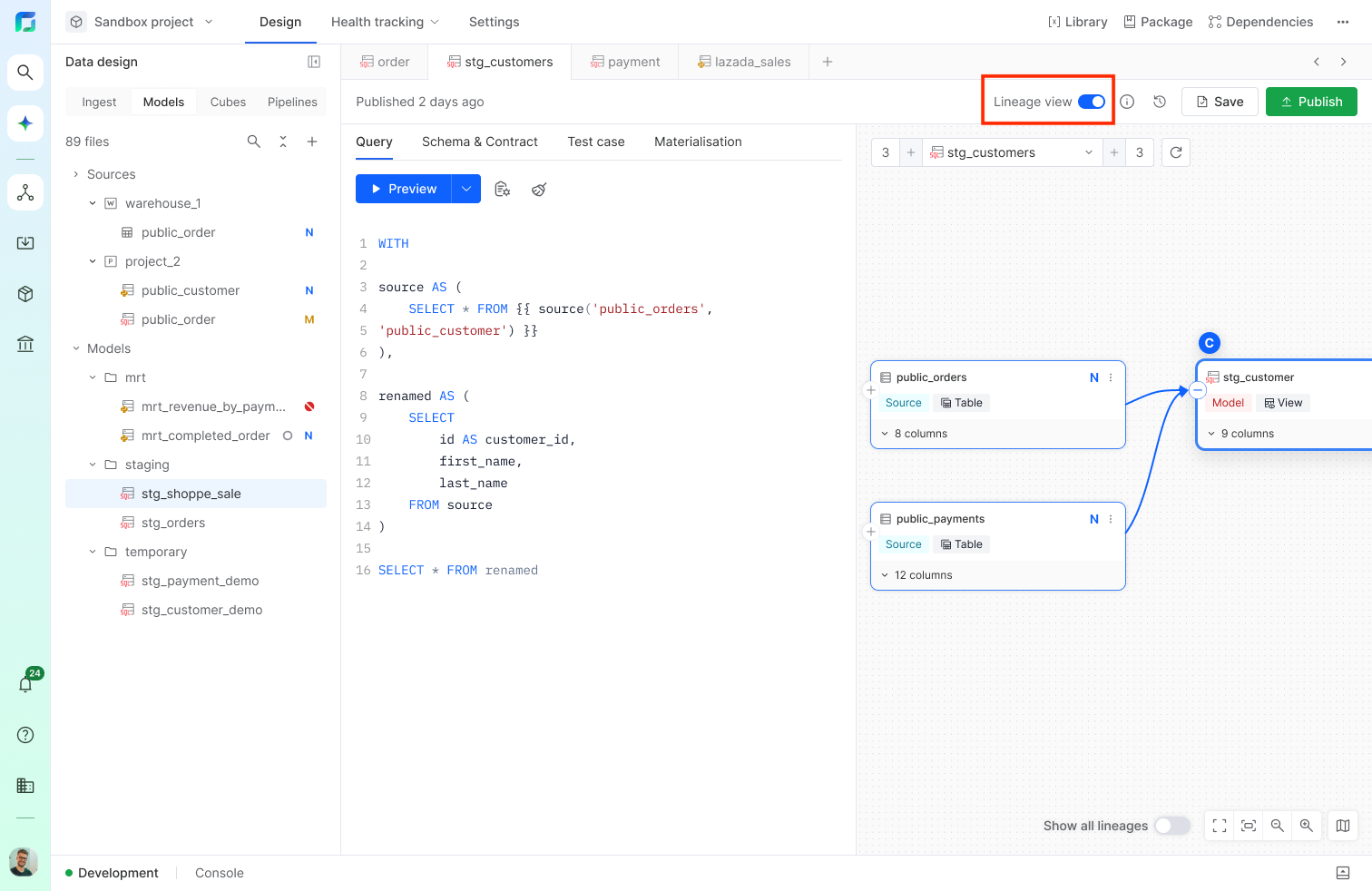
要在 Recurve 中查看数据血缘,请打开某个资产的编辑器,并启用 **“血缘视图/ Lineage view”** 选项。
在血缘视图中,所有资产将以节点形式展示,通过连接线显示它们之间的关系。你可以点击并拖动节点来调整位置,以获得更加清晰的视图。
左下角的工具栏支持扩展血缘部分、放大或缩小视图,并聚焦当前资产的节点。
## 数据血缘导航
### 以中心节点为主
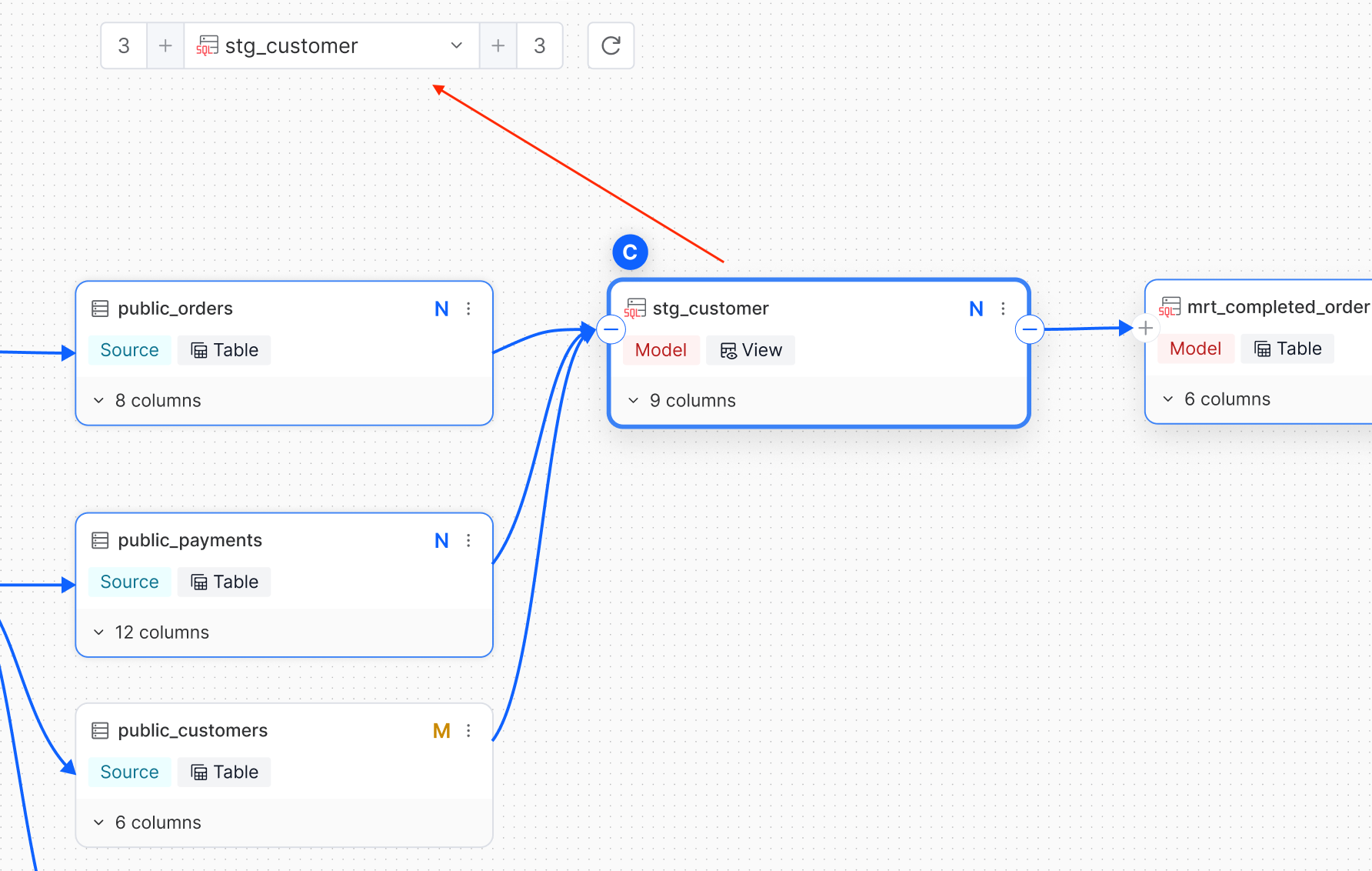
默认情况下,选中的资产/节点会作为中心节点显示。在项目比较大且转换流程复杂时,某个资产可能会有很多关联的节点。通过聚焦一个节点,血缘视图能帮助你查看该资产的信息,以及它与上游和下游模型的关系,从而更好地优化整个转换流程。
您还可以使用左上角的搜索栏来查找特定资产,并调整当前节点的上游和下游层级数。
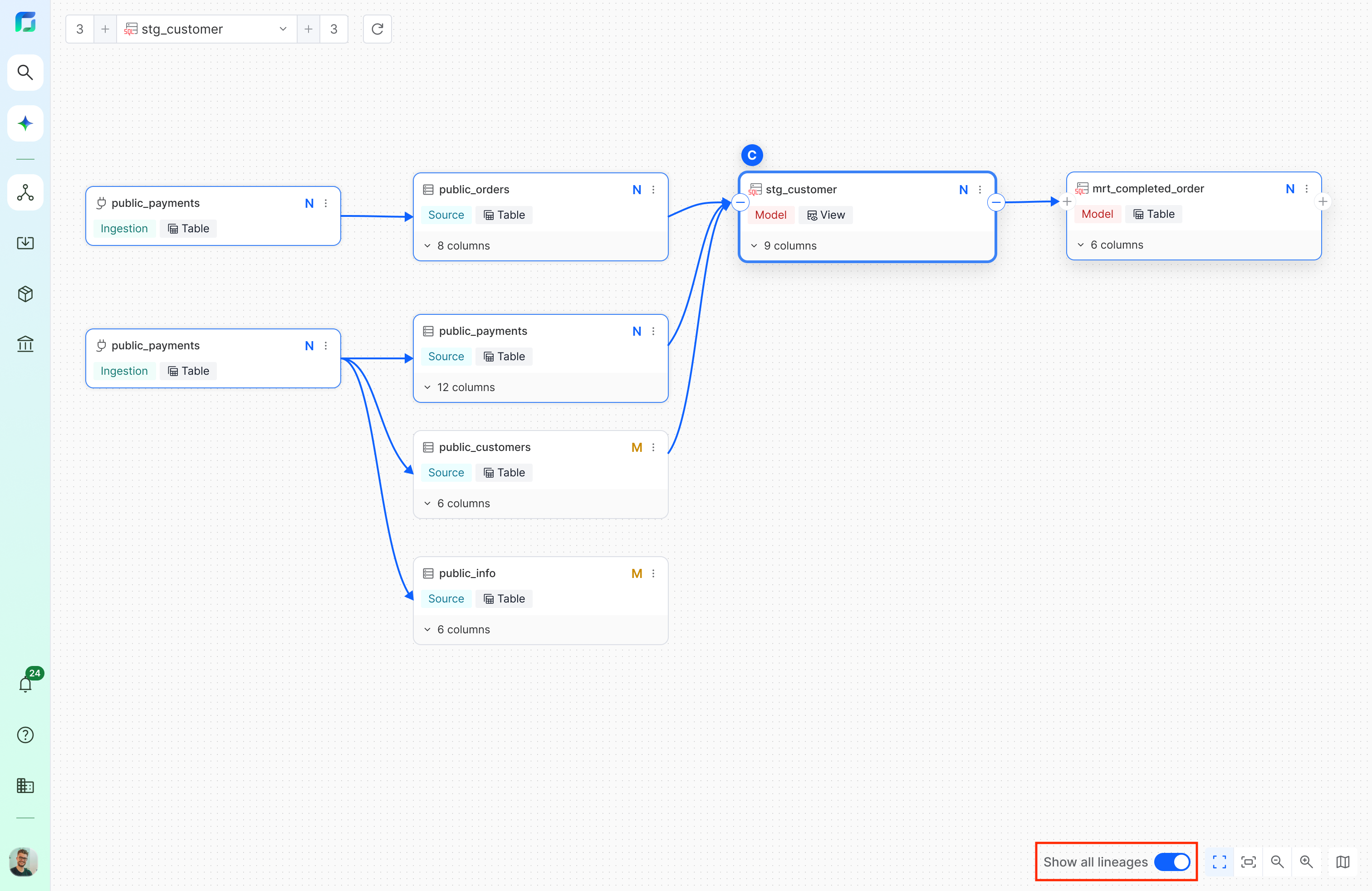
### 显示所有血缘
如果你想查看项目中所有资产的完整数据血缘,可以开启 **“显示所有血缘/ Show all lineages”** 选项。